Showing posts with label general election. Show all posts

Monday, 3 July 2017

Increased tuition fees do not cause increased participation

Tuition fees are back on the political agenda, big time. Arguably a significant component in the unexpected relative success of the Labour Party at the 2017 General Election, there are now calls by senior Ministers for a ‘national debate’ on the issue: see, for instance, Damian Green’s speech to the Bright Blue think tank on the weekend.

One aspect of this which is worth examining is the connection between fees and access: on the one hand there us the fear that debt will put people off university (and hinder their subsequent life-chances); on the other there is the evidence that participation by students from less advantaged backgrounds has grown since the introduction of higher tuition fees in 2012. I've seen it argued - by people including a Vice-Chancellor of a UK university - that fees have helped with this process.

But of course, correlation does not imply causality. And because higher education is a devolved matter, there’s a simple experiment which can shed light on the question about whether fees encourage participation.

Scottish domiciled students pay no tuition fees if they attend Scottish universities. If they attend universities in England they pay the normal home rate – that is, £9,000. HESA data lets us see whether more Scottish students attended universities in England after fees were increased in 2012, which they should if tuition fees encouraged greater participation.

Here’s the data. It shows the number of undergraduate students attending universities in England from each of the four UK nations: England, Scotland, Wales and Northern Ireland (NI). The data covers the years 2008-09 to 2015-16: that is, four years under the £3k tuition fee regime and four years under the £9k regime. The number of English students is several orders of magnitude higher than those from Scotland, Wales and Northern Ireland, so I’ve used two vertical axes. The left had axis show student numbers from Wales, Scotland and NI; the right hand axis shows students from England.

Data from HESA Student data, table N
The chart shows that the number of English students at English universities grew over the eight years, from about 780,000 to 925,000. The number of Welsh and Northern Irish students at English Universities also grew, from 15,000 to 22,000 in the case of Wales, and from just shy of 8,000 to just over 9,000 in the case of Northern Ireland.

The number of Scottish students at English universities did not grow. 4,840 Scottish students attended English universities in 2008-09; 4,255 attended in 2015-16.  And just to be clear, there isn’t a peculiar effect of declining number of eligible Scottish students: the number of Scottish students attending Scottish universities grew from about 84,000 to about 94,000 over the same period.

So it seems that tuition fees do not cause increased participation. The growth in English students can be explained by the availability of places: the cap on recruitment was removed in the couple of years following 2012, giving universities an incentive to recruit as many students as they wished. But if students could study in their home country for free, as in the case of Scotland, they were immune to the charms and marketing persuasions of English universities.

So when the debate plays out, be careful to spot when correlation (growth in student numbers in England) elides into claims of causation. The evidence is that tuition fees do not cause a growth in student numbers.

Monday, 26 June 2017

Lessons for Leaders from the election

The UK’s general election and its fallout were certainly interesting. The outcome means that certainly about funding and policymaking is likely to be harder to come by in the coming years (or months, maybe?). This will have impacts on many areas of professional life.

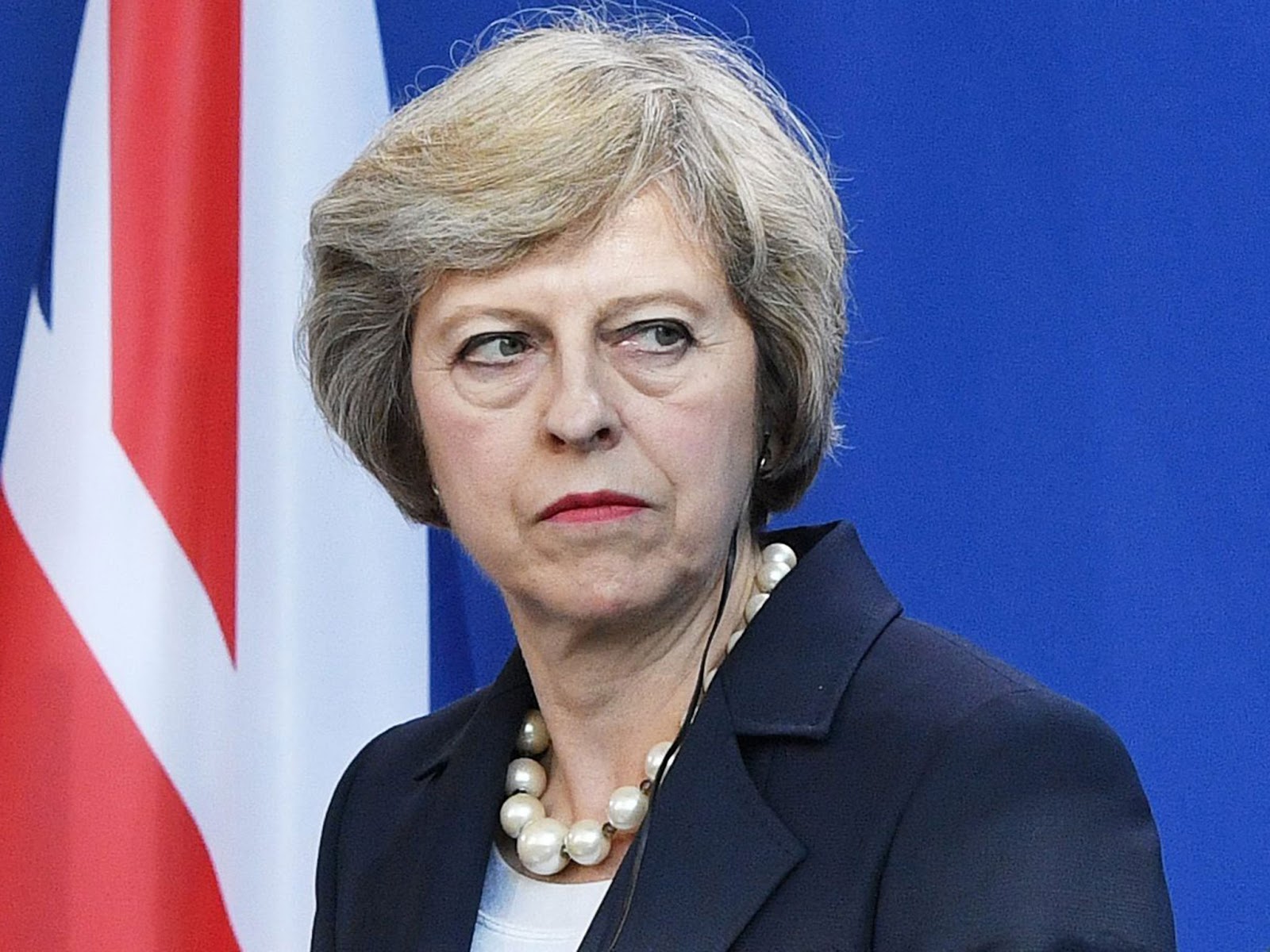
The fates of the leaders of the two main parties – Theresa May and Jeremy Corbyn – are also instructive. I’m not seeking to make any political points, here, but it seems to me that leaders in any organisation can learn two important lessons from the campaign.

Firstly, let’s look at Theresa May.  Before calling the election her party had a commanding lead in the polls, and her standing as Prime Minister was high. She had attained her party leadership and the Prime-Ministership by acclaim, as all other candidates withdrew. Her confident messaging on Brexit, perhaps the defining issue for our political times, seemed to resonate with her party and with voters at large. And so she called an election, clearly believing that a larger majority was hers for the taking. And the campaign was for Theresa May’s Conservatives – the Prime Minister’s personal identify and appeal to the voters.

But as we all know, it was not to be. The campaign exposed the lack of depth in her manifesto - for instance, cabinet ministers not involved in drafting key policies, and only aware shortly before publication of key and controversial policy commitments. This led to the removal of a manifesto commitment about social care costs within a couple of days of its being announced. Another issue was the repetition of one key message – Strong and Stable Leadership – to levels approaching parody. When a question time audience openly laughs at the Prime Minister, it is clear that something isn’t right. And a theme emerged of a person who was unable to respond to real issues; who appeared to have taken the election for granted.

Even so, the election outcome was a shock for many. The opinion poll from the impressive Professor John Curtice – which turned out to be pretty damn accurate – was ignored and talked down by all pundits and all parties for the first two-to-three hours of results. But by the next morning it was clear that Theresa May had lost her overall majority, and had lost the ability to command without consensus in her party.

What had gone wrong? To my mind, she had committed the sin of believing her own propaganda. Her message of strength and stability had not been tested by an internal party challenge. She had had no feedback at that point. She ran a tight circle within Number 10: her policy staff were said to exclude many of her own MPs and minsters from effective discussion. And so no voice was there to say that that things may not have been as she saw them. Theresa May 0, Hubris 1.

And what of the other side? Jeremy Corbyn went into the election with many convinced that his party was going to be humiliated. His own allies were setting a low bar for success – anything above 200 seats, according to Len McCluskey of Unite, would be good. And note that this 200 seats mark would mean losing 30 current seats. His enemies within his own party had been seeking to have him removed as leader ever since his election. And opinion polls and spread betting companies were suggesting that the party might finish with as few as 130-150 seats, plumbing depths not seen since the 1930’s.

Although the Labour Party was uncharacteristically united during the election campaign, the mood amongst its candidates was not good. Few reportedly featured Jeremy Corbyn on their literature; the campaign was a defensive one, targeting marginal seats held by Labour. And the campaign had some poor performances, with a shadow cabinet member hidden from view to avoid media focus on her apparent inability to work with numbers; and Jeremy Corbyn himself in difficulty over the gap between his personal view of nuclear weapons and that of his party.

When the results were in, Labour had come a distant second; with fewer seats than Gordon Brown won in 2010. It was clear that there was no realistic prospect of a Labour Government: the parliamentary arithmetic just did not allow it. But the narrative was all about the fantastic performance of the Labour Party.

  • 40% of the vote! (Never mind that the Conservatives had got 42.4%). 
  • A +9.5% swing to the party. (Never mind that the Conservatives had a +5.5% swing). 
  • Thirty extra seats! (Never mind that the party wasn’t in power.)

What had Jeremy done right? He clearly had authenticity and communicated better than his adversary. That got the election result. And he managed expectations very, very well. Everyone expected humiliation; he ended up only defeated. This becomes a triumph in itself – defying the odds, the underdog emerges unbowed. And we do all love an underdog, don’t we?

So, leaders, take note.

Firstly, you’re probably not as brilliant as you may think. You need to listen to others. Don’t be like Theresa.

Secondly, manage expectations. Under promise and over deliver. Everybody loves a positive surprise; nobody likes to be disappointed.

Both Theresa May and Jeremy Corbyn live on to fight another day. Theresa is still PM, although clearly her tenure is time limited. And Jeremy will fight the next election as leader of the Labour Party, if that is what he chooses to do. But Theresa now needs to bring strength and stability where she cannot. And Jeremy can no longer be the underdog: his party expects him to deliver government. Tough times for them both.

Tuesday, 19 May 2015

Shut that door!

One outcome of the election which seems very clear is the continuation of previous Home Office policy towards international students. This won’t be welcome news to universities.

Firstly, the Conservative manifesto:
We will reform the student visa system with new measures to tackle abuse and reduce the numbers of students overstaying once their visas expire. Our action will include clamping down on the number of so-called ‘satellite campuses’ opened in London by universities located elsewhere in the UK, and reviewing the highly trusted sponsor system for student visas. And as the introduction of exit checks will allow us to place more responsibility on visa sponsors for migrants who overstay, we will introduce targeted sanctions for those colleges or businesses that fail to ensure that migrants comply with the terms of their visa.(p30, We will continue to cut immigration from outside the EU)
Secondly, the ministerial team: Theresa May reappointed as Home Secretary; James Brokenshire reappointed, but with a narrower brief, covering immigration only (in the last government he had responsibility for Immigration and Security). Both have proven unresponsive to lobbying on the question of overseas student numbers and their inclusion in the net migration targets.

There are three specific actions:

  • Reviewing the highly trusted sponsor (HTS) system, under which universities are allocated the right to sponsor a certain number of students
  • ‘Clamping down’ on satellite campuses in London – that is, London campuses operated by universities outside London. Presumably the argument is that away from the main administrative operation, there’s a greater risk that students will not be ‘genuine’ students, whatever that is held to mean
  • Placing more responsibility on sponsors for students who overstay their visas – presumably requiring universities to keep tabs on where their students are, and where necessary taking direct steps to ensure that they leave the UK when their visas expire.

My guess is that the first thing to happen will be the HTS review, which will lead to more stringent criteria for achieving highly trusted status. And several universities either having their HTS status withdrawn, or choosing not to reapply. I've posted before on the dependency of UK universities on overseas student fee income, and removal of HTS is likely to have real and deleterious consequences.

Is that what the fuss is really about?
And on the same theme, but more positively for universities, London First published today a report on the benefit to the UK of London-based international students. (See also the BBC news report.) Using what looks like a pretty rigorous methodology, PwC calculate that overseas students at London universities (not at satellite campuses, mark you) generate £2.8 billion annually for the UK economy, and draw on £540 million annually of public services, a net annual benefit of £2.3 billion.

The report is well worth reading, and makes some sensible recommendations to government including, crucially, not counting overseas students within the net migration total. The problem here is that the Conservative manifesto is very specific; it’s an area where 2010 manifesto commitments weren't met, leading to pressure to deliver this time; and the narrative is tied in with the question of Europe, and the in-out referendum. I’m fairly sure that the Prime Minister doesn't want to the UK to leave the EU; but he’s calculating that to win the referendum he needs to be seen to be tough.

Difficult times ahead. It would take a brave university to plan on growth in overseas student numbers; it might be wise to work on a few contingency plans too.

Friday, 8 May 2015

The people have spoken ...

And I’m not sure that many expected exactly the result we’ve got. There’s lots of things to be said about the detailed HE policy implications of the election result, and I might well say some of them in due course. But for now I just want to set out a few thoughts about the bigger political context – a small majority, Europe, Scotland and austerity.

Nicholson St, Edinburgh. Spot the Union Jack. #indyref2 on its way.
Firstly, the small majority. It won’t take many rebellious Conservative MPs to create a problem for the government. One or two voting against something won’t make a difference – the opposition doesn’t coalesce around any obvious point of view for that to be the case – but 20-30 rebels could well defeat the government. So there’ll be careful management of parliamentary business and it may well be that more contentious issues are shelved if they can be. Some university issues definitely count as contentious – 2010 Millbank riots anybody? – so HE issues that need parliamentary discussion or votes might not be flavour of the month.

Secondly, Europe. One of the ways that the Prime Minister will keep his MPs happy is to progress EU negotiations quickly in the hope that by 2017 there’s a good deal enabling a positive referendum campaign to stay within the EU. The problem is that what counts a good deal depends very much on where you’re sitting, and the benefits of Europe that accrue to HE – student mobility, research funding – might not look so beneficial if you’re worried about public spending and migration. So there could be a bit of planning blight around things European which might be tricky.

Thirdly, Scotland. I’ve been spending some time in Edinburgh recently and it’s obvious that something has changed in how lots of people in Scotland think and feel ab out the UK, its politics and government. The post-referendum response by the UK government was a fudge, and contributed to yesterday's overwhelming SNP victory in Scotland. If the issue is taken seriously, then pro-union views might yet find a way to keep Scotland within the UK, but I wouldn’t bet on it. And as HE is a devolved matter, any discussions around constitutional change or devolution will have an impact. No matter which part of the UK you’re in, this will affect you.

And finally, money. Even before the election campaign we knew that there were substantial further cuts planned to government spending. In England, BIS will not be immune; and the consequential impact upon budgets in devolved administrations (even if we assume that the Barnett formula will be maintained) will be real too. So the question of the sustainability of student funding (fees, grants, depending on where you are) and the amount of research funding will become pressing issues. But, see above, contentious issues might have to be shelved because of parliamentary problems. So research funding is likely to get clobbered.

Some of this would be true no matter what the outcome of the election, but it does seem to me that parliamentary politics hasn’t stopped being interesting for higher education yet...